Be yourself; Everyone else is already taken.
— Oscar Wilde.
This is the first post on my new blog. I’m just getting this new blog going, so stay tuned for more. Subscribe below to get notified when I post new updates.
Be yourself; Everyone else is already taken.
— Oscar Wilde.
This is the first post on my new blog. I’m just getting this new blog going, so stay tuned for more. Subscribe below to get notified when I post new updates.


Timing– Knowing what time of the day, week, mouth and even year to post certain content is a secret in this profession. Just like everything else, your viewers have a certain time of the day they are on social media the most. It is important to know when the best time is to share your content. Instagram just released a new feature that allows influencer to see when their followers are most interactive with your profile. This algorithm has everything to do with the time you are supplying your content. It is said that one of the best times of the day to post is between 11 a.m. and 3 p.m. also known as lunch time! Try to avoid sharing new content anytime past 8 p.m. a lot of people will miss it!
Staying active – Raise your hand if you like unanswered texts, yeah me either. It’s the same way on social media. No one like a MIA friend or influencer in that case. It isn’t enough to simply put up content and let it generate its own conversation. You have to stay engaged! Check those messages, comments and likes, and respond to your followers! Keep them updated and let them know that they are appreciated!

HAPPY CONTENT CREATING!
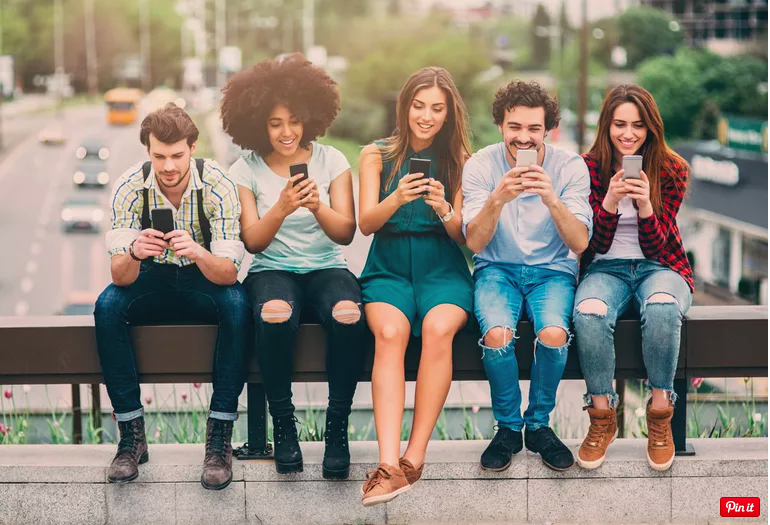
I like…You like…We like…
Why do we do it? Why do we seek it? Why do we need it?
Has social media transcended into a platform of conformation? Is it no longer a window for others to see the adventures we’ve had, the friends we’ve made, and the special moments within our lives?
I understand that we all enjoy an occasional like, a humbling sign of recognition, but is it a good thing, a healthy thing to rely on it? Have we entered an era of society where our self-value is determined by the number of likes we receive on our social media profiles? Hate to break it to you, but its looking that way.
Instagram released this statement earlier in the year. “We hope this test will remove the pressure of how many likes a post will receive, so you can focus on sharing the things you love. The aim is to reduce anxiety and social comparison, care about well-being, safety and integrity.”
Well there you have it, a company taking a controversial action in trying to diminish a social dilemma created by none other than the like button. So, here’s the thing, is it a good thing or a bad thing.
Let me beak it down to you, as the poster, you can see your own likes! That feature has not gone away. That validation is still there. However, you as the viewer the “liker” per say, you can no longer see how many other people have liked the post you just viewed.
So, what does this do? How does this affect the viewers mental health? A lot of people will argue that it eliminates social comparison, which makes sense, I can see that my post received a certain amount of likes but I can’t see the dramatic difference in likes that a social media influencer may have. But why is that such a big deal? To the average person who may have a maximum of 1000 or so followers, it is not our social responsibly or our job to generate likes. However, for an influencer it is their job to maintain and supply their viewers with content that keeps them intrigued and in turn supplies them with likes. So why are we comparing ourselves to these people? Why is our mental health decreasing as their likes increase?
I can’t tell you how many times I’ve desperately waited for a “the right” number of likes. We’ve all done it, don’t lie. We do this because we know how many likes other users are getting. If I didn’t know how many likes others were receiving, I probably wouldn’t care as much about my own. So does this new feature help my mental health? I believe it does. We are a breed of human that will forever compare ourselves to one another. Survival of the fittest if you will. This is just one way we can try to avoid this subconscious behavior.
This article by the Chronicle talks a lot about the relationship between mental health and social media, along with their thoughts on the vanishing likes. In this article, PBS News Hour demonstrates this comparison, “Imagine if every time you go to a bank, you get your balance, but you also see the balance of other people. It will cause most people to feel annoyed or dissatisfied with what they have… ”
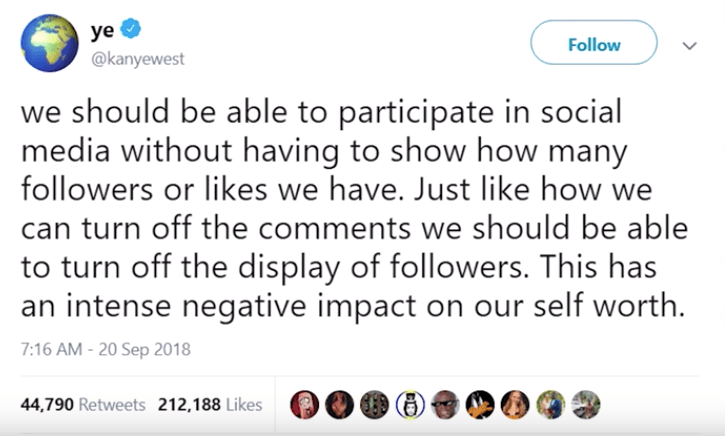
Surprisingly some of the biggest names on social media have already spoken out about getting rid of the like visibility. In 2012 Kanye West posted this tweet about it, and undoubtably he was right. Has Instagram come up with a solution to the crippling battle of mental health on social media, or has it put a bandaid over the real problem?
Vanishing Likes
Hi everyone! My name is Samantha Smith, a college senior at Virginia Commonwealth University. I chose Communications with a concentration in Public Relations as my degree for a multitude of reasons, but foremost because I believe that learning how to properly communicate with the people around you is one of the most essential skills someone could have. In a way this degree chose me, Ive always loved meeting new people, hearing their stories and having those experiences change my life.
Hopefully this blog will allow me to talk about some topics that I normally wouldn’t talk about on other social media platforms. Being a part of the Robertson School of Media and Culture has opened my eyes to the wonders of all things Communications, Advertising, and Journalism. Now, I hope to take some of what I’ve learned and teach others. I hope that you enjoy it!
This is an example post, originally published as part of Blogging University. Enroll in one of our ten programs, and start your blog right.
You’re going to publish a post today. Don’t worry about how your blog looks. Don’t worry if you haven’t given it a name yet, or you’re feeling overwhelmed. Just click the “New Post” button, and tell us why you’re here.
Why do this?
The post can be short or long, a personal intro to your life or a bloggy mission statement, a manifesto for the future or a simple outline of your the types of things you hope to publish.
To help you get started, here are a few questions:
You’re not locked into any of this; one of the wonderful things about blogs is how they constantly evolve as we learn, grow, and interact with one another — but it’s good to know where and why you started, and articulating your goals may just give you a few other post ideas.
Can’t think how to get started? Just write the first thing that pops into your head. Anne Lamott, author of a book on writing we love, says that you need to give yourself permission to write a “crappy first draft”. Anne makes a great point — just start writing, and worry about editing it later.
When you’re ready to publish, give your post three to five tags that describe your blog’s focus — writing, photography, fiction, parenting, food, cars, movies, sports, whatever. These tags will help others who care about your topics find you in the Reader. Make sure one of the tags is “zerotohero,” so other new bloggers can find you, too.

 Small talk with Sam Smith